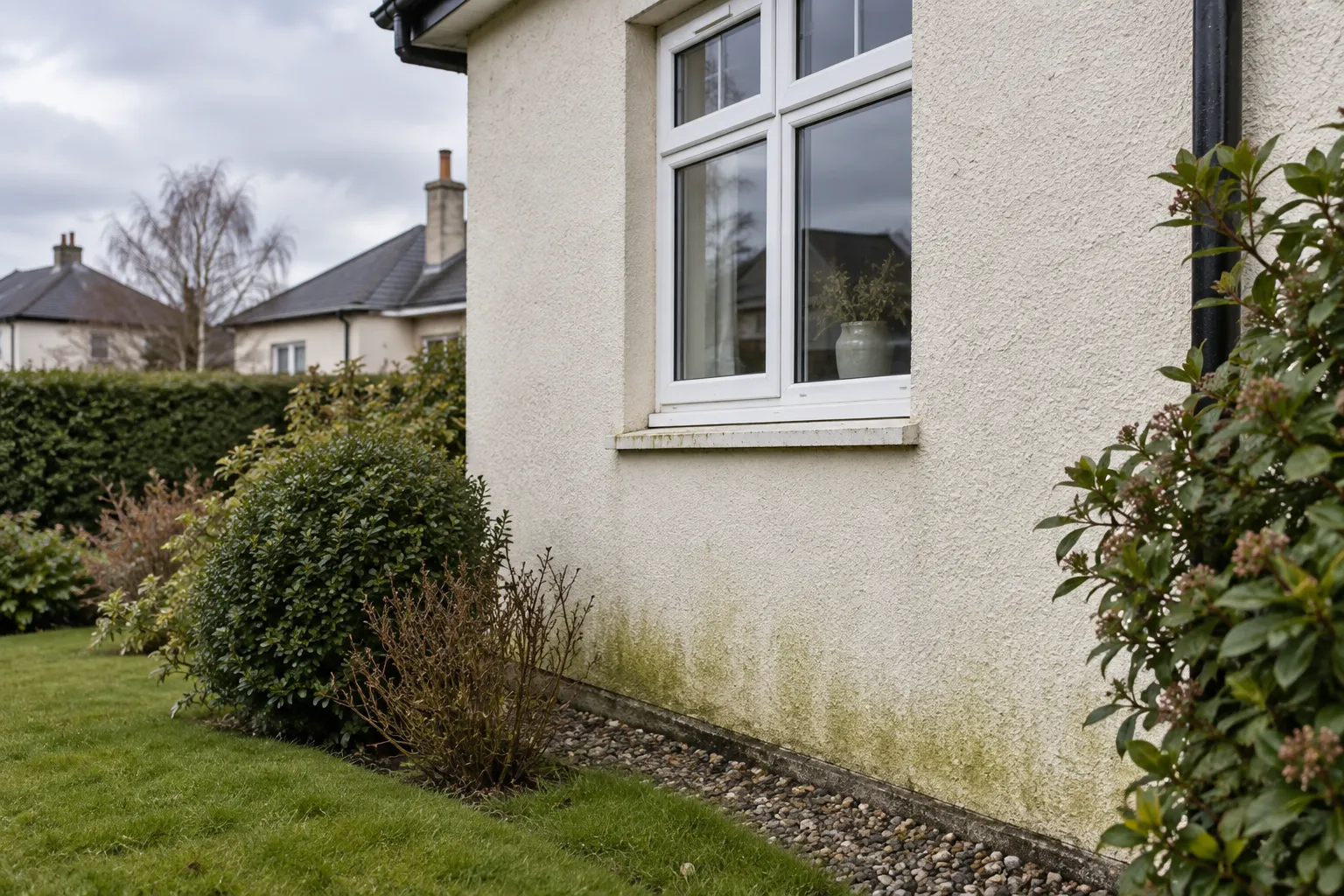
A careful conversation about the finish
A discoloured wall does not automatically need aggressive cleaning. First establish the type of render or coating, its condition and the cause of the visible mark. Surface growth, staining and a damaged finish are different problems and may need different responses.
David offers render cleaning as part of his exterior-care services. Send a wide view of the wall and a close-up of the affected area. If you know the render manufacturer or have recent installation paperwork, include that information when you enquire.
What to flag before a clean
Cracks, hollow areas, flaking paint and signs of moisture inside the building deserve attention before cleaning. A cleaning visit should not be used to conceal an unresolved defect. If you suspect a building problem, have it assessed by the relevant trade first.
Mention vents, external electrics, alarm boxes, cables and planting near the wall. Safe access and protecting surrounding features are part of deciding what is appropriate.
Why a test area can matter
A test area may help establish how a finish responds and what result is realistic. Older stains may not disappear completely, and patches of different age or repair can remain visible after surface contamination is addressed.
Ask about the proposed method, any product used and the relevant manufacturer guidance. The render-care guide sets out the information to gather and questions to ask.
Set the scope clearly
Confirm which elevations and accessible sections are included. Gable ends and walls above extensions may involve different access arrangements from a ground-level wall. Do not assume every surface on the property will be cleaned under one description.
For the details at the roofline, see fascia and soffit cleaning. If roof moss is contributing loose debris to the area, discuss the roof cleaning service before scheduling the final wall clean.
Send your postcode, wall photographs and any finish information through the contact page to begin an assessment-led quote.