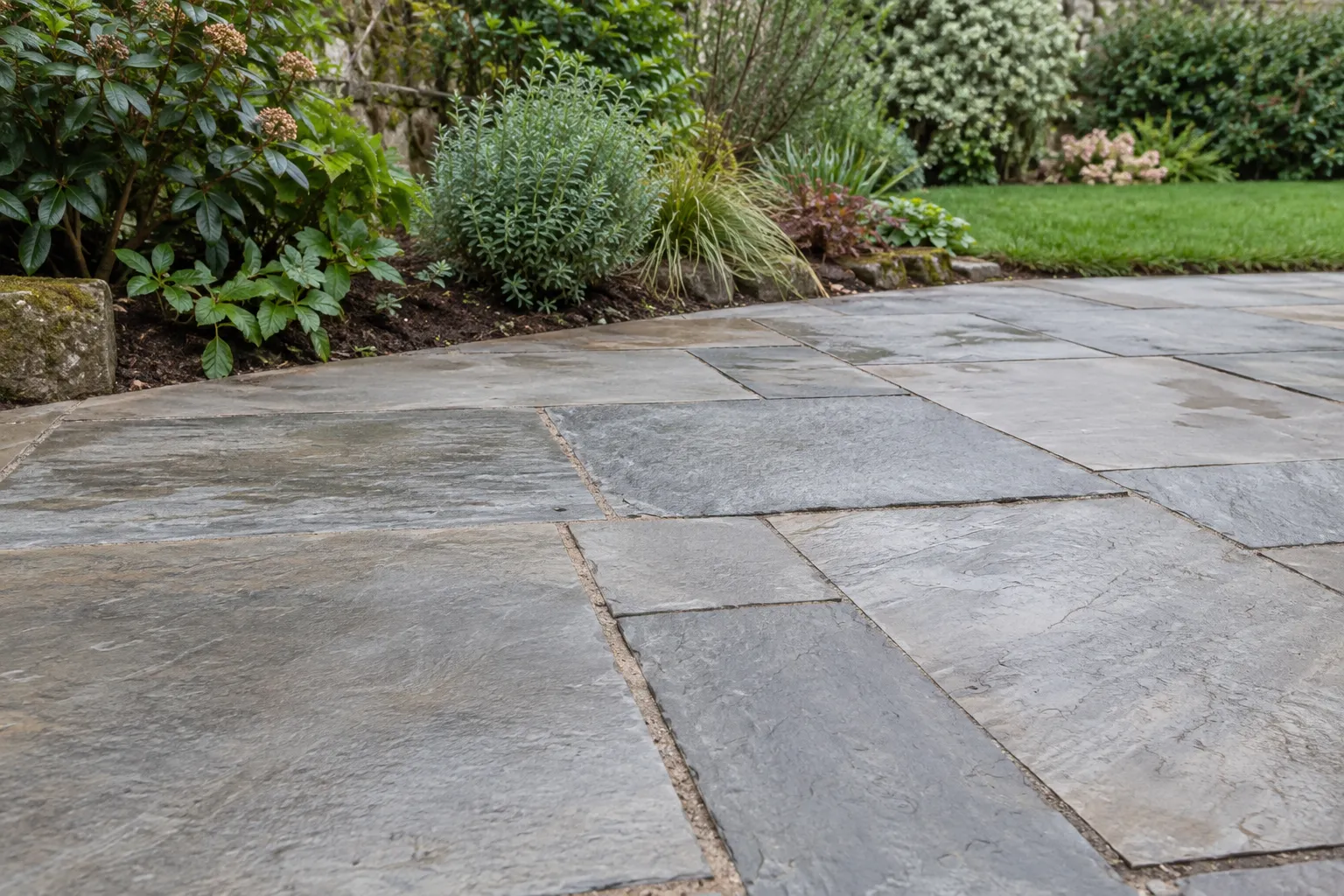
Make room for enjoying your garden
A patio can change gradually: darker patches near the wall, organic build-up in a shaded corner, or dirt around planters. A thorough discussion helps distinguish ordinary surface build-up from staining, failed joints or worn stone.
Tell David what the paving is made of and what you want to improve. If you do not know the material, a close-up and a wider photograph are a good starting point. Different stones and manufactured slabs can respond differently to cleaning.
Look beyond the middle of the patio
Edges, steps, drains and pointing all affect the plan. Loose slabs or crumbling joints should be flagged before work, because cleaning will not fix movement or replace damaged pointing. Include photographs of areas where water tends to collect.
Nearby lawns, borders, ponds and external doors should be discussed too. The working area and the route for runoff need consideration, especially in an enclosed garden. There is no advantage in treating the paving without thinking about what surrounds it.
Agree what is realistic
Some marks are caused by staining within the material or long-term weathering. A cleaning service cannot guarantee that an older patio will look newly laid. Ask about the likely outcome for the marks you are most concerned about and whether a test area is appropriate.
Our patio preparation guide covers simple steps to help the visit run smoothly. If the garden has both paving and timber, read about deck cleaning as a separate surface.
Before and after the appointment
Move furniture, small pots and loose items when practical, and discuss anything too heavy to move. Keep pets away from the work area and follow the agreed guidance on when the patio can be used again. Leave doors and windows near the working area closed as advised.
Once the patio is back in use, clear loose leaves and soil regularly. This does not eliminate all future growth, but it avoids leaving a layer of debris in place between cleans.
For a quote in Glasgow or one of our surrounding areas, send your postcode and two or three photographs showing the space, surface and access.